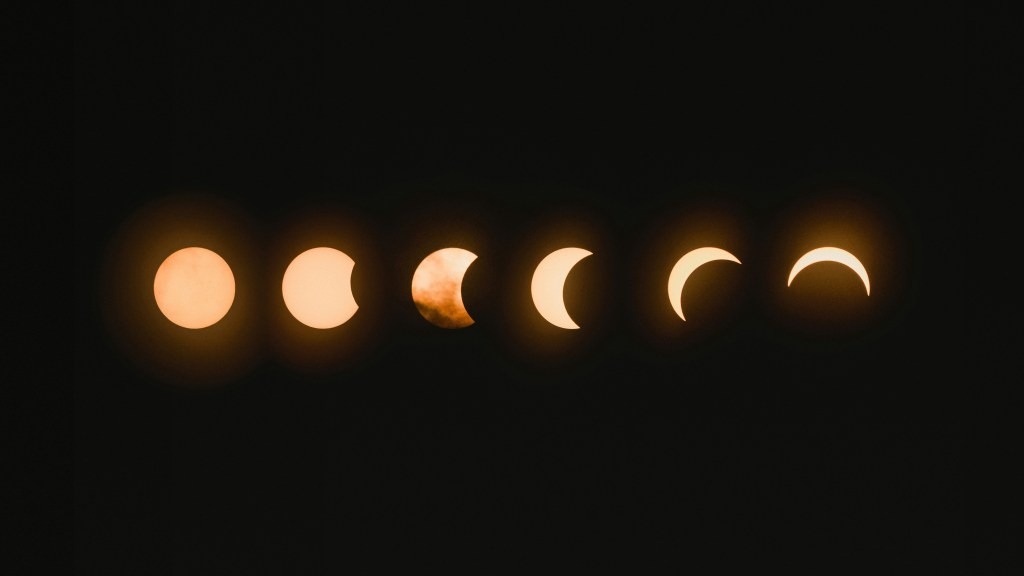
Photo by Mark Tegethoff on Unsplash
I hope you all enjoyed the solar eclipse last night. I watched it through a simple pinhole camera and saw the disc of the moon gradually obscure most of the sun. It became quite gloomy and the birds went quiet. I remember the last one in 1999. It was a similar, eerie experience.
For the research into my books set during the cotton famine in Lancashire, I read the diary of George Burnett for the years 1862 to 63. He lived in Blackburn at that time and worked as a draper. His diary is full of snippets about everyday life, but this entry from Wednesday, 9th July 1862 caught my attention. During the previous week he’s talked about rain every day and once again it was raining. Much rain this morning he says. Then goes on A countryman attributes the wet weather to the extraordinary phenomenon of the seven eclipses that are predicted this year.
Intrigued, I went to check if this was true. I found dates for five of them – three solar eclipses and two lunar eclipses.
12 June (total lunar eclipse)
27 June (partial solar eclipse)
21 November (partial solar eclipse)
6 December (total lunar eclipse)
21 December (partial solar eclipse)
These weren’t all visible in the UK, but it shows that ordinary people were aware of them and discussing them, and blaming them for the weather. Sadly, it doesn’t look like last night’s phenomenon is going to bring us any much-needed rain.
The first book in the cotton famine series The Soup Kitchen Girl is published on 17th September and available to pre-order now from online retailers and all book shops.
If you’d like to read more of George Burnett’s diary you can on Cotton Town.

